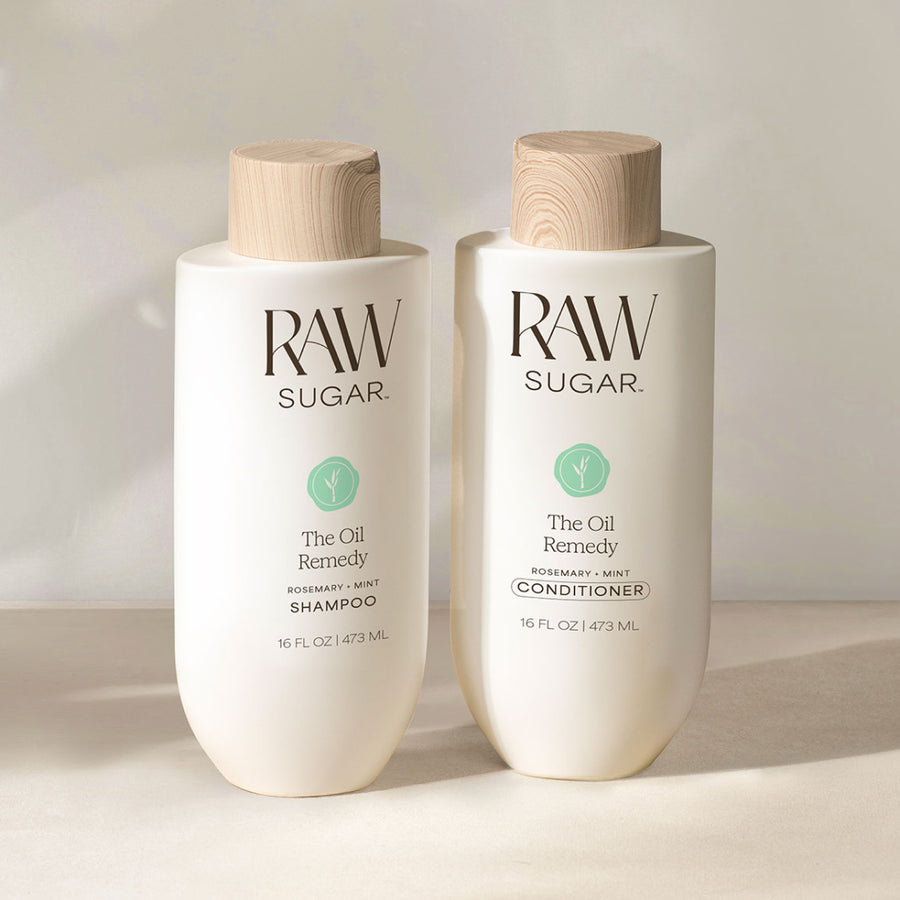


The front of a shampoo bottle is basically a dating profile. Great lighting, best angle, a lot of words like “nourishing” and “pure.” The back of the bottle is the background check. It’s tiny, it’s printed in a font designed for ants, and it’s the one part of the package that has to tell you what’s actually inside.
This guide walks through how to read a hair care ingredient list, which shampoo ingredients are worth looking for, which ones you might want to skip, and how to tell the difference between a formula and a marketing campaign. No chemistry degree required. Reading glasses, maybe.
Why Ingredient Lists Matter More Than Marketing Claims
Here’s the uncomfortable truth about beauty labels: a lot of the words on the front don’t have an official definition. In the U.S., terms like “natural,” “clean,” “botanical” and “gentle” aren’t defined by the FDA for cosmetics, so brands can use them pretty freely. Two shampoos can both call themselves “natural” and have very little in common.
The ingredient list is different. Cosmetic labels are required to list ingredients by name, in order of how much of each is in the formula. That makes it the most honest few square inches in your shower.
Labels are also slowly getting more detailed. The Modernization of Cosmetics Regulation Act of 2022 (MoCRA) directed the FDA to require brands to disclose fragrance allergens on cosmetic labels. As of fall 2026, that rule still hasn’t been finalized, and the FDA’s most recent agenda lists a proposed rule as the next step. For comparison, the EU has required certain fragrance allergens to be named individually on labels since 2003. Until the U.S. rule lands, a single word like “Fragrance” or “Parfum” can still stand in for a whole blend of components.
Bottom line: the front of the bottle is the pitch. The back is the proof.
How to Read a Hair Care Ingredient List
Ingredient lists use INCI names (short for International Nomenclature of Cosmetic Ingredients), which is why shea butter shows up as “Butyrospermum Parkii (Shea) Butter” and aloe shows up as “Aloe Barbadensis Leaf Juice.” It looks intimidating. It’s really just Latin wearing a lab coat. Here’s how to read it, step by step.
- Start at the top. Ingredients are listed by concentration, from highest to lowest. In most shampoos and conditioners, Water (Aqua) is first because it’s the base of the formula.
- Pay the most attention to the first five or so. The ingredients near the top make up the majority of what’s in the bottle. If a product is sold as “coconut-rich” and coconut oil is the second-to-last ingredient, that’s useful information.
- Know about the 1% rule. Ingredients present at 1% or less can be listed in any order after the ones above 1%. So the further down the list you go, the less the order tells you. A small amount isn’t automatically useless (some extracts and vitamins work at low levels), but it does keep expectations realistic.
- Find the cleanser. In shampoo, the main surfactant (the ingredient that does the actual cleaning) is usually in the top few. Sodium Lauryl Sulfate (SLS) and Sodium Laureth Sulfate (SLES) are the strong ones. Gentler options include names like Sodium Cocoyl Isethionate, Decyl Glucoside and Cocamidopropyl Betaine.
- Find the preservative. Anything that contains water needs a preservative so it doesn’t grow things you didn’t buy. Common ones include Sodium Benzoate, Potassium Sorbate and Phenoxyethanol. Parabens end in “-paraben.”
- Check for fragrance. Look for “Fragrance (Parfum)” and any individually named fragrance components such as Linalool or Limonene. If you know you react to certain fragrance ingredients, this is where to look.
- Read the asterisks. If an ingredient has an asterisk, there’s a footnote somewhere on the label explaining it, usually a certification. Brands add asterisks to tell you something specific, so it’s worth the extra squint.
- Check whether it’s a cosmetic or a drug. Medicated products, like anti-dandruff shampoos, are regulated as over-the-counter drugs in the U.S. They carry a Drug Facts panel that lists the active ingredient (common ones include zinc pyrithione, salicylic acid, selenium sulfide and ketoconazole) separately from the inactive ingredients. If you’re comparing dandruff shampoo ingredients, the active ingredient line is the one to read first.
Let’s practice on a sample conditioner label
Water (Aqua), Cetearyl Alcohol, Behentrimonium Chloride, Glycerin, Cocos Nucifera (Coconut) Oil, Simmondsia Chinensis (Jojoba) Seed Oil, Aloe Barbadensis Leaf Juice, Panthenol, Sodium Benzoate, Potassium Sorbate, Fragrance (Parfum)
Translation: water is the base. Cetearyl Alcohol sounds alarming, but it’s a fatty alcohol that gives conditioner its creamy texture, not the drying kind of alcohol (that’s usually listed as Alcohol Denat. or SD Alcohol). Behentrimonium Chloride is a conditioning agent that helps with slip and detangling. Glycerin pulls in moisture. Coconut oil and jojoba oil moisturize, aloe hydrates, and Panthenol is pro-vitamin B5. Sodium Benzoate and Potassium Sorbate keep it fresh, and fragrance makes it smell like something you’d want to put on your head. Not so scary once you know the cast.
Ingredients to Look For in Clean Formulas
“Clean” doesn’t have a legal definition, so the most useful thing a brand can do is show its work. Here are the ingredients you’ll find across Raw Sugar hair care, and what each one is there to do.
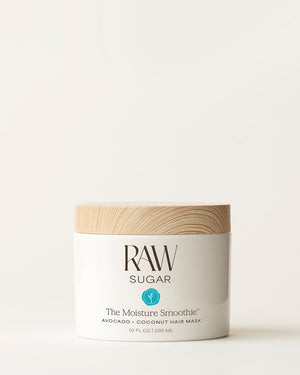
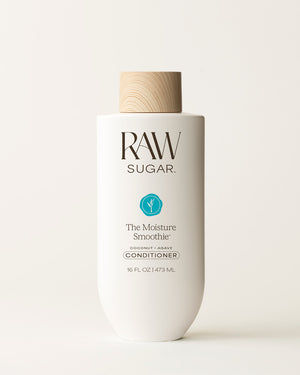
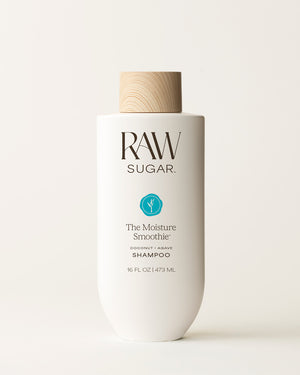
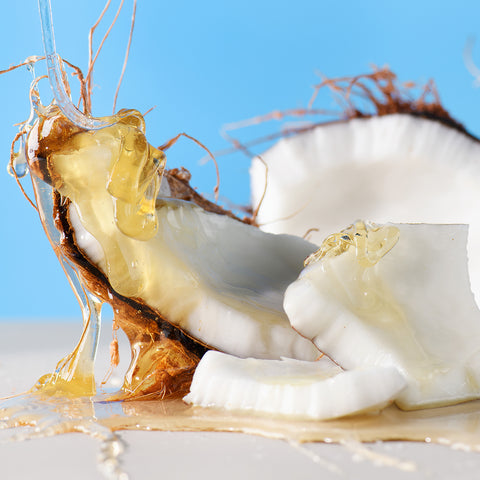
- Coconut Oil (Cocos Nucifera Oil): helps moisturize hair. It’s in The Moisture Smoothie and The Mighty Curl collections for exactly that reason.
- Shea Butter (Butyrospermum Parkii Butter): nourishes hair. Rich, creamy and especially good news for dry ends.
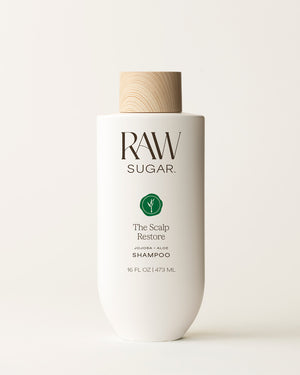
- Jojoba Oil (Simmondsia Chinensis Seed Oil): moisturizes and nourishes. You’ll find it in The Scalp Restore Shampoo and Conditioner.
- Aloe (Aloe Barbadensis Leaf Juice): soothes and hydrates.
- Pro-Vitamin B5 (Panthenol): smooths and softens.
- Niacinamide: calms and supports scalp health. It’s one of the three hero ingredients in The Scalp Restore Shampoo.
- Glycerin: a humectant that helps hydrate hair by drawing in moisture.
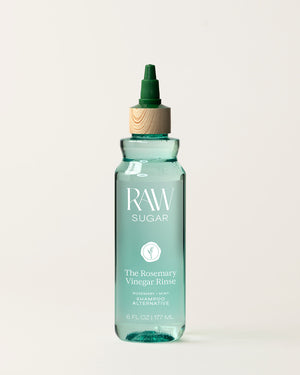
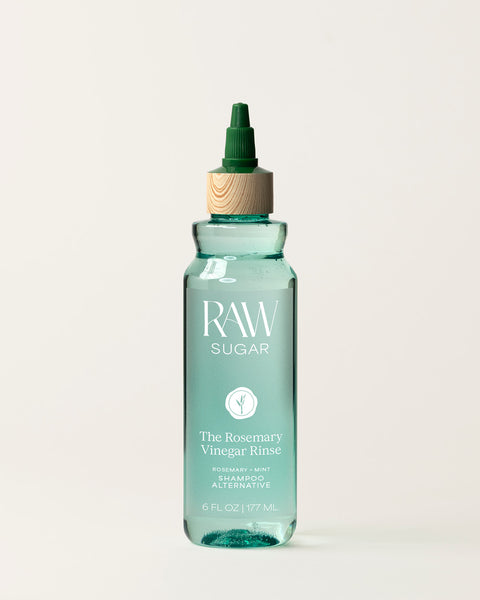
- Apple Cider Vinegar: helps balance pH. It shows up in The Mighty Curl Shampoo and The Rosemary Vinegar Rinse.
- Vegan Biotin: supports healthy hair. It’s part of The Grow Pro collection.
A good rule of thumb: you should be able to look up any ingredient on a label and find a clear reason it’s there. If the reason is “it makes the bottle look pretty,” that one’s optional.
Ingredients to Skip: SLS/SLES, Parabens, and Other Red Flags
No single ingredient is a villain for every person, and dose matters. But these are the ones people most often choose to skip, and why.
SLS and SLES
Sodium Lauryl Sulfate and Sodium Laureth Sulfate are powerful detergents that create big foam and clean very effectively. The trade-off is that they can strip hair and scalp of their natural oils, which matters most if your hair is dry, curly, color-treated or your scalp runs sensitive. For the full breakdown on how the two differ, read SLS vs. SLES.
Parabens
Parabens (methylparaben, propylparaben, butylparaben and friends) are a long-used family of preservatives. Regulators currently allow them in cosmetics at approved levels, but plenty of people would rather skip them, and so do we. Here’s more on what parabens are and why they’re on so many skip lists.
Phthalates
Phthalates have historically been used in some fragrance blends, which means they won’t always appear on a label by name. Since you can’t always spot them yourself, it’s worth choosing brands that state they’re formulated without phthalates.
Silicones
Look for names ending in “-cone,” “-conol” or “-siloxane” (like Dimethicone or Cyclopentasiloxane). Silicones give instant slip and shine, but some types can build up over time, especially on fine or curly hair, leaving it limp or coated.
Formaldehyde releasers
Preservatives like DMDM Hydantoin, Imidazolidinyl Urea, Diazolidinyl Urea and Quaternium-15 slowly release small amounts of formaldehyde, a known skin sensitizer. Formaldehyde in hair-smoothing products has been on the FDA’s regulatory agenda, which tells you how seriously it’s being looked at.
Synthetic dyes and drying alcohols
Synthetic dyes (listed as FD&C or D&C colors, or CI numbers) make a product a fun color and do nothing for your hair. Drying alcohols like Alcohol Denat. and SD Alcohol high up on the list of a leave-in product can leave hair feeling parched. Remember, fatty alcohols like Cetearyl Alcohol are the good guys.
How Raw Sugar Formulates Without These Ingredients
We’re not going to pretend a shampoo will fix your whole life. But it definitely shouldn’t make your hair worse. Every Raw Sugar hair care formula is:
- Formulated without SLS/SLES, parabens, phthalates, silicones or synthetic dyes
- Clean, PETA-Certified Animal Test-Free and vegan
- Made with fragrance compliant with EU and IFRA safety standards
- Packaged in a bottle, jar or tube that contains 30% recycled content
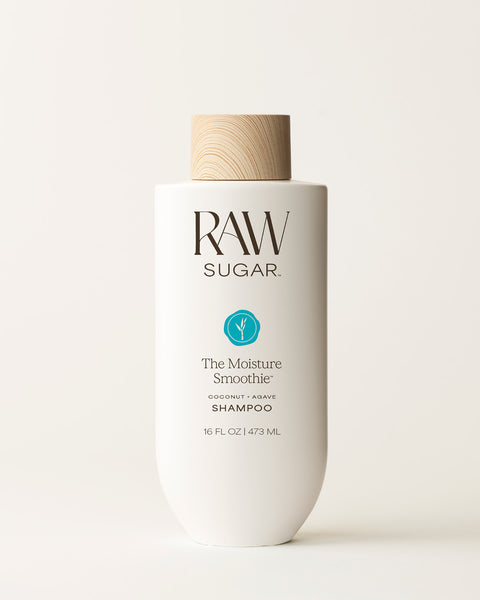
That means when you flip one of our bottles over, the list is built around ingredients that are there to do a job, like Coconut Oil and Shea Butter in The Moisture Smoothie Shampoo or Jojoba Oil, Aloe and Niacinamide in The Scalp Restore Shampoo. If you want the longer version of why we care about this, start with why clean ingredients matter.
Read the back. Then shop the bottle that passes. Raw Sugar shampoo and conditioner are formulated without SLS/SLES or parabens, so every ingredient on the label works for your hair, not against it.